Showing posts with label Professional Development. Show all posts

Monday, June 10, 2019

Summer Reading

It’s almost summer, which means people are starting to plan or make goals for their next few months of reading. If you’re looking for recommendations, look no further than the 2019 Summer Reading List published by the We Are Kid Lit Collective

Formerly known as We’re the People, the We Are Kid Lit Collective was founded by Edi Campbell in 2015. The website explains that the group "works to create materials and opportunities to recognize the humanity of Indigenous and People of Color (IPOC) in youth literature. Our work is premised upon the principles of social justice, equity, and inclusion and centers IPOC voices in children’s literature in order to identify, challenge and dismantle while supremacy and both internalized and systemic racism. Our intended audience includes educators, librarians, caregivers and young people. We look for ways to improve the literacies of IPOC children, promote books written by and about IPOC, and to encourage gatekeepers to bring a lens of critical literacy to their work." 

The 2019 Summer Reading List was curated by a team of authors, librarians, and scholars: Tad Andracki, Edi Campbell, Laura Jiménez, Sujei Lugo, Lyn Miller-Lachmann, Debbie Reese, and Dr. Sonia Alejandra Rodriguez. Every title was read and vetted by at least two professionals to ensure the books celebrate “diversity, inclusivity, and intersecting identities.” Check out the list and all of the other resources available on the We Are Kid Lit page!


What additional books are you looking forward to reading this summer? Please share in the comments. Here are a few titles some of the RWW contributors are excited to read or recommend:


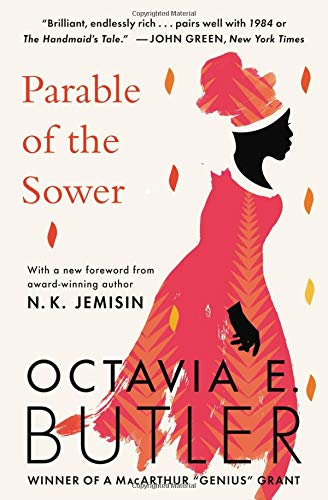
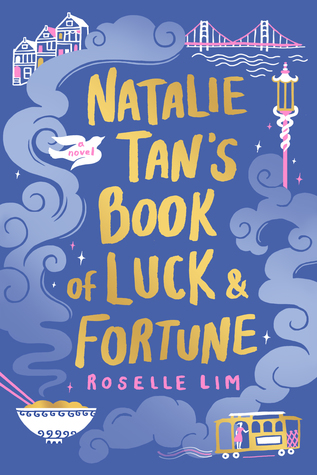
Jenna: The only Octavia Butler I’ve read is Kindred, so I’m excited to delve into more of her work, starting with this new edition of Parable of the Sower. My favorite book of the year so far is Natalie Tan’s Book of Luck and Fortune by debut author Roselle Lim so I’ve been recommending that nonstop as a great summer read.
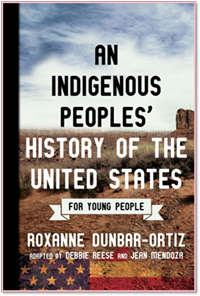
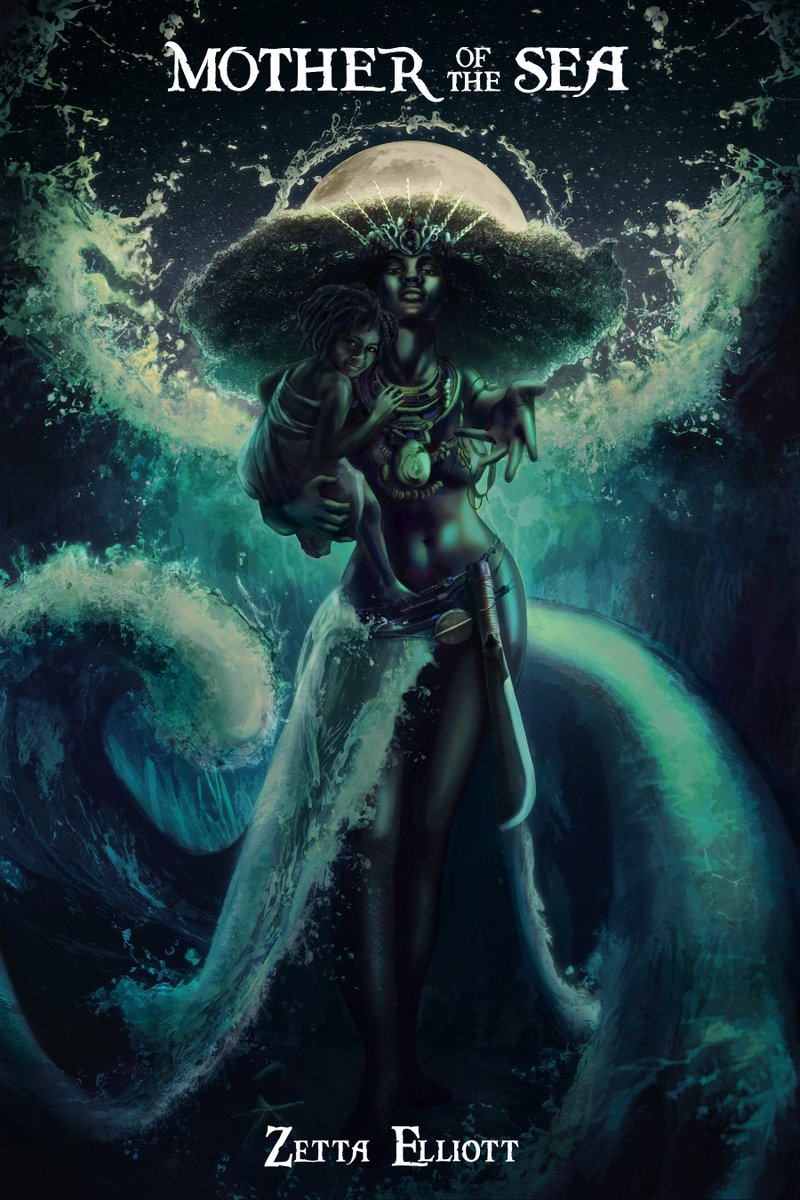
Allie: I cannot WAIT to dive into An Indigenous Peoples’ History of the United States For Young People, by Roxanne Dunbar-Ortiz, Debbie Reese, and Jean Mendoza. For my own recommendation, although this came out a while ago, I want everyone to read Mother of the Sea by Zetta Elliott, a novella that straddles the line between YA and Adult and between realism and magical realism. It’s a powerful work of art and activism.

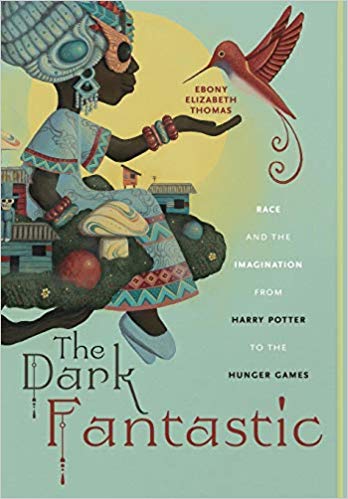
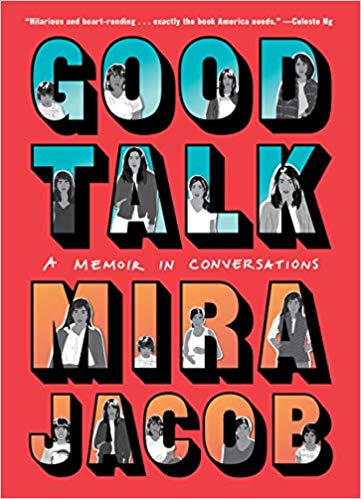
Sam: So, I’m currently in the midst of Ebony Elizabeth Thomas’s The Dark Fantastic: Race and the Imagination from Harry Potter to the Hunger Games, which is required reading for everyone in children’s and young adult literature. I just finished Good Talk: a Memoir in Conversations by Mira Jacob, and it was one of those books that you want to reread the moment you finish it. (The only reason I didn’t do that was because of the size of my to-read pile!)


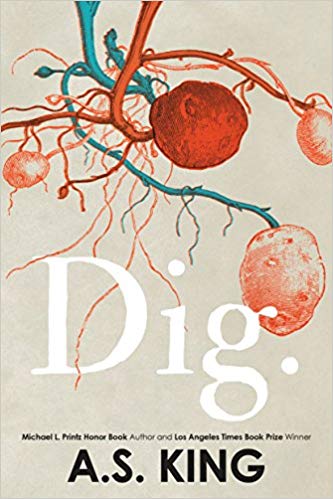
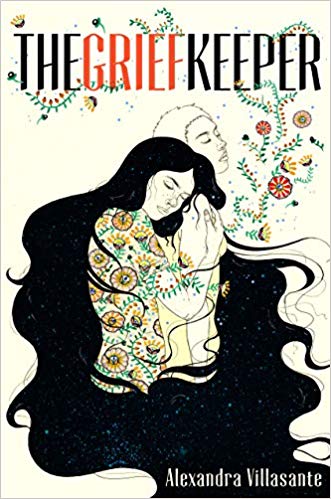
Megan: I’m looking forward to both The Dark Fantastic and the adaptation of  An Indigenous People’s History of the United States . Recent or not-so-recent reads I can’t stop thinking about include The Griefkeeper by Alexandra Villasante (just finished!), Love from A to Z by S.K. Ali, and A Place to Belong by Cynthia Kadohata. The New Kid by Jerry Craft is about the school year but so funny and fearless that there’s never not a good time to read it. Finally, although it’s not by a BIPOC author, I want to also give a shout out to A.S. King’s Dig, which has me thinking a lot about how White writers can address race and racism--something I think this book excels at (and although I wouldn’t say it’s the main point of the story, it’s not not the point, either).

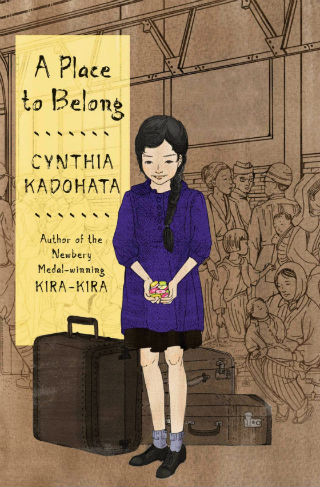
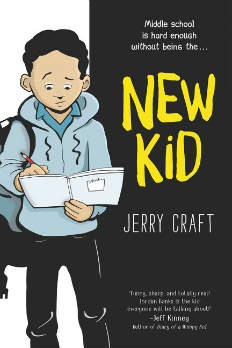
Elisa: There are so many good books here! My summer book club is discussing The Dark Fantastic and An Indigenous Peoples’ History of the United States For Young People, so I’ll be reading those too. I’m also looking forward to reading and learning from Eve Ewing’s 1919, a book of poetry spotlighting stories from the Chicago race riot. Another one on my to-read list for August (when it gets released) is Ibram X. Kendi’s How to Be an Antiracist. I recommend everybody take a look at
This Place: 150 Years Retold, a comics anthology exploring stories of Indigenous resistance and leadership past, present, and future.


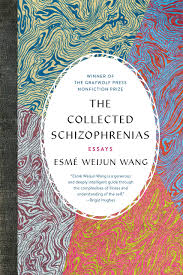
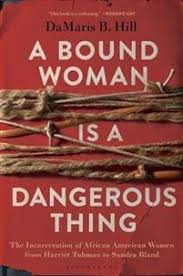
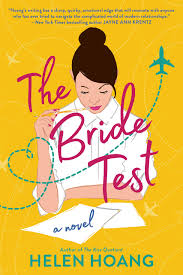
Kazia: Like Sam, I just read Good Talk and can’t recommend it enough! I have two nonfiction titles at the top of my (small) TBR pile of books for grownups:The Collected Schizophrenias: Essays by Esmé Weijun Wang and A Bound Woman Is a Dangerous Thing: The Incarceration of African American Women from Harriet Tubman to Sandra Bland by DaMaris B. Hill. Last year I read and loved The Kiss Quotient by Helen Hoang, so this summer I’m also really excited to get my hands on her sophomore romance, The Bride Test!
Tuesday, April 2, 2019

An Open Letter to Scales on Censorship and School Library Journal


Reproduced, with permission from School Library
Journal © Copyright Library Journals, LLC
a wholly owned subsidiary of MSI Information Services
Each issue of School Library Journal contains a full-page segment entitled Scales on Censorship, where Pat Scales, former chair of the American Library Association’s Intellectual Freedom Committee, answers questions on censorship. Today Sam Bloom responds to one question from the March 2019 piece, which is pictured here but can also be found here or on page 28 of the print copy.

Hello! I have read Scales on Censorship for quite a while, and like many others, I have trusted Pat Scales over the years to give well-reasoned responses to challenging questions.

However, I was taken aback by one of the responses in the March issue (see photo). In it, Pat Scales answers a question on how to handle “books containing any amount of cultural misrepresentation”; namely, “Where do we librarians draw the line between sensitivity and censorship?”

I agree that this is a tough question, one I grapple with on a daily basis. I also agree with Scales’s statement that it’s “our duty to purchase books that accurately portray the ethnicity of the main characters”; to that I’d add any number of intersecting identities (gender, sexuality, etc.). But I take issue with Scales’s qualifier that “to remove or refuse to purchase a book because someone sees a small inaccuracy is censorship.”

First of all, let’s talk about the choices book buyers make when deciding how to use their budgets. In terms of deciding not to purchase a book based on cultural inaccuracies, well, I feel like we’ve had this talk beforemany, many times before. Librarians make purchasing choices based on a book’s quality every day. Is it censorship to not purchase a book because it gets poor reviews? I’d say no–that’s simply an informed purchasing choice. And how could cultural inaccuracies *not* affect a book’s quality? (Also, if I may go back to Scales’s “small inaccuracy” comment? That inaccuracy may not seem so “small” to someone else. I also encourage Scales to examine the White privilege that allows her to minimize that which could cause pain to someone from a marginalized group by dubbing it “small”. Not to mention that Scales’s phrasing–“someone sees” an issue–subtly deemphasizes that problematic content in books really does exist, it’s not just people “seeing things.”)

Now on to the issue of librarians who “remove” books with problematic content. I see this referenced a lot in articles from mainstream press, and as an argument it lacks nuance. I certainly cannot say for sure that no single librarian has pulled a book from the shelves because they found it problematic, but in my experience this isn’t a recurring issue sweeping through libraries nationwide. In my large library system, we have hundreds of copies of Little House on the Prairie and its sequels; we also still have 20 live copies of a book that a publisher actually pulled from publication three years ago! And if you walk into a children’s room anywhere in the country, I wager you will find at least one copy of Ghosts in the collection.

Referring librarians to the WNDB resources page is a great call. I want to point out, however, that several of the sites listed by WNDB are curated by the very same “bloggers and library professionals” whose “strong opinions” regarding cultural representation in books leads them to “sometimes use their online space to aggressively influence book-purchasing decisions.” So I guess Scales recommends people read these bloggers *unless* they are critiquing a book, and as long as they conform to her idea of what meets the criteria for “non-aggressive”?  I don't think it's fair or constructive to those of us serving youth to reject the work of these individuals when they are critiquing representation while holding up their work when they are recommending books; both aspects of these bloggers’ work are critical to all of us serving children and teens. Scales’s whole framing of the power dynamics–bloggers are people who “aggressively influence” decision-makers by making problematic books their “target”–stems from a place of White privilege and fragility and fails to acknowledge that some books, and some content within books, in fact constitute acts of aggression against young readers.

Furthermore, I am also concerned with the way Scales framed A Fine Dessert within her response. Yes, it received some “excellent reviews,” but as Lee & Low’s Diversity Baseline Survey has shown, the overwhelmingly White/female/cishet world of reviews shouldn’t always be taken at face value. Not to mention that in March 2015, before any internet activity had gained steam in relation to A Fine Dessert, John Lithgow wrote this in his New York Times review: “In a bold and somewhat unsettling choice, they portray a smiling slave woman and her daughter….” Critique of this book was not limited to social media; and the fact that some critique does originate online does not lessen its validity. It is far past time for us to acknowledge and embrace the fact that some of the critical perspectives on books are coming not from review journals but from professionals in our field writing on blogs and elsewhere on social media. Again, let’s recognize our privilege as White people in the profession when we start picking and choosing when and if we are willing to listen to critical voices on social media. I believe we can fold these critical perspectives into our consideration and understanding of specific titles.

Here’s what Scales wrote next: “Instead of removing the title because bloggers thought a few pages were problematic, librarians should engage young readers in conversation about the controversy.” This remark feels flippant and dismissive of some scholarly and expert opinions, but I would also caution adults (especially White adults) that this is a conversation that would take a great deal of preparation and education for the adults in question. A poorly handled conversation with young children about slavery could very well reinforce stereotypes.

Finally, regarding Vamos a Cuba, Scales wrote that “other Cuban Americans” disagreed with the Cuban American school board member who first recommended the book be pulled from the shelves. Scales then asked, “Whom do you believe?” A shared heritage for any of us does not mean identical experiences or perspectives and so the fact that there was and is disagreement is not and should never be surprising. But this makes it all the more critical to be as informed as possible when making selection decisions when it comes to accuracy and authenticity, and today we are fortunate to have informed critical perspectives from professional sources outside those we have traditionally relied on. “Whom do you believe” is a starting point, not the end point, and there isn't necessarily a “right” or “wrong” answer for any book, but there are “informed” and “uninformed” choices, and it is our responsibility to be as informed as possible in selecting materials according to our local policies and procedures.

I don’t believe the two things in Scales’s last sentence should cancel each other out. I am working and listening and opening myself to ways of learning how to be culturally sensitive, *and* I am using my skills from library school (though not every librarian has been to library school, nor do I believe one has to go to library school to be an effective librarian) to understand the importance of reading reviews from journals such as School Library Journal *and* from blogs on our Kindred Spirits list. Which brings me to Scales’s closing thought, about the need to parse “which reviews and online tools to trust.” Questions about cultural authenticity and censorship do not exist in a vacuum, nor are they free of power imbalances and racist, oppressive legacies. I do not accept the binary thinking that says criticism = attack = censorship, and I encourage all White members of the children’s literature community–including myself, my fellow members of Reading While White, and Scales–to examine and question the White privilege we necessarily bring to these discussions. Until that happens, I no longer trust Pat Scales to give advice where censorship intersects with cultural representation.

Sincerely,

Sam Bloom

Thursday, October 11, 2018

The Privilege of Nostalgia

When I first learned about Jane Mount’s Bibliophile: An Illustrated Miscellany, I was excited. (I love books! This is a book about loving books? What is there not to love?!) My heart sank, however, when I saw this preview spread of the “Formative Faves” page via Amazon:


Almost every book featured in this spread was written by a White personand one of them is Little House on the Prairie. (I'm not sure that having your humanity denied to you through racist depictions and erasure in literatureboth singularly and systemicallyinspires bibliophilia.) Every human illustrated on this page is depicted with the same shade of pinky-pale skin. I know that this is just one spread of the book, and there are attempts elsewhere to include voices of readers and authors of varying identities; still, the message this particular spread sends to me is that the “Formative Faves” page was made with White readers in mind.


The stories I read in my own formative years are not too different from those listed in the book. If I made a list of my favorite books from when I was a kid, only one title would be a book by an author of color. There are more racist titles by White people in my childhood memories than authentic multicultural stories or #OwnVoices texts. I can’t change what I read as a child, nor can I deny my majority-White authored reading history. I will never know how much I missed out on, how many stories I did not get to hear, because creators were not given opportunities to write or publish their own stories and also because my grown-up gatekeepers did not give me access to all of the books that were published. I will spend a lifetime trying to understand the effect this lack of connection to these stories and problematic representation in these stories had on my development and socialization. I must continue working to unlearn the lessons taught subtly and explicitly through the stories I did and did not (and still today, do and do not) have opportunities to read.


When I think about my childhood reading, I can choose not to think about the racist books I loved. Because I do not face racism as a White person, it is easy for me to (though I am working to not do this) fall into the trap of making racism a “thought experiment” or glossing over what is problematic. This is all a result of privilege. I don’t have to carry the trauma of having to suffer through book lists, read alouds, and a celebrated ‘canon’ of books that dehumanize or erase me because I am White. When I think about my childhood reading experiences and I feel warm and fuzzy, these feelings are a result of all of the books I connected with as a kid, the books that affirmed me, all of the racial mirrors I had (taking Rudine Sims Bishop’s metaphor into account). Those feelings of coziness and belonging are NOT universal, and White readers like me have to stop pretending that they are. Racist books, even those from the past, are not ever reflective of the way all people “thought back then.” As long as there have been books, there have been people fighting racism in booksand today, with more knowledge, I can be thoughtful in choosing which books from my past I want to celebrate in my present.


Nostalgia for a racist institution like #kidlit (or politics, or school, or film, or theater, or fine art) will always support racism. Because children’s lit is an institution brimming with White supremacy culture, nostalgia reflects and perpetuates this reality. In our capitalistic society, #kidlit book nostalgia has also been commodifiedand its racism has been embedded in that too. Do you love Out of Print clothing? Take a look at how many T-shirts you can buy that celebrate books by creators of color (not many). How about MerryMakers dolls or the children’s literature posters made by Litographs? See how few IPOC artists are represented in what is available.


I’m not saying that people should not celebrate a favorite book or author with a tote bag or other merchandise. I am asking my fellow White people to think more about what the tote bag selection says about the industry and its history, and what systems these collections of merchandise continue to support. Book nostalgia and capitalism will never stop chugging out book-themed stuff for us to consume, but librarians, teachers, and readers can work to see how this too is part of the push to romanticize the pastand that ‘looking back’ also impacts our culture of today. Whenever and however we celebrate this past, and assume that readers’ formative experiences were positive and affirming, who are we assuming as the default audience? When White stories, creators, and readers are centered over and over and over againWhite people like me are being told that we matter more. That our stories matter more. That our lives matter more. We see this in the “classics.” We see this in what book T-shirt options exist. And this has a direct connection to the inequities we see today, from the practitioner end (for example, the lack of racial diversity in upcoming conference lineups like #mra50) and publishing (see CCBC’s most recent statistics on racial diversity in children’s book publishing).


Last month I had a chance to visit the American Writers Museum. In the room focused on children’s literature, there is a mural celebrating children’s “classics.” Unsurprisingly, this mural reflects both the lack of diversity in children’s literature as well as the overt (yet unchallenged in this display) racism in titles like Little House in the Big Woods and Island of the Blue Dolphins. Until there is equity in the children’s literature ecosystem, there will never be equity in our culture of #kidlit nostalgia or celebrations of the classics. We can’t erase nor can we forget the past, but we can choose when, why, and how much to focus on it. We can intentionally examine this past critically, following the lead of people doing this now using the hashtag #DisruptTexts. We can work to understand our nostalgia and the purpose it serves. Hopefully this work will translate into action, including conscious choices to focus less on upholding and romanticizing the past and more on what changes needs to happen, and what excellent books can be celebrated, today.

Thursday, May 31, 2018

Contemporary Colorblind Racism & White Aggression


There are many resources available that discuss the consequences of an ideology of racial colorblindness. Many White people in our industry, understanding that colorblindness is a damaging form of racism, have moved beyond “I don’t see color.” But we White people haven’t moved as far as we’d probably like to think. So how does colorblind racism in kidlit function today? 

To me, it looks like White people seeing and naming race, but refusing to acknowledge that race has meaning. For example, we White people have a vested interest in continuing to call for and champion books in which characters’ racial identities mean little or nothing (to us). Conversations and criticisms about what some refer to as “casual diversity” aren’t new, but I’ve seen them showing up more and more in conference sessions, book clubs, and other spaces in recent months. We need to ask ourselves: What is it about the idea of “casual diversity” that makes it so appealing to us White people? 

One look at the CCBC statistics shows the imbalance of power in kidlit, and the need for more stories expressing a range of genres, experiences, emotions, and characterizations. I am NOT saying that there is not a need for increasing books by and about POC and Native people about all sorts of experiences, including books about contemporary, “normal” kids. I am not saying that we shouldn’t listen to people speaking about their own marginalized racial identities and what types of books they would like to see or write more of and why (please let’s do that!). I am asking us White people to recognize that when we have a laser focus on “casual” racial diversity over other issues in kidlit, it takes on a layer of meaning given the overwhelming Whiteness of the industry. I am asking us to recognize that we have limits to our understanding of others' racial experiences and we also have the unearned privilege to define and regulate what is seen and perceived as “normal” or “casual” in the first place. And as fellow RWW contributor Megan Schliesman pointed out to me in a recent email about this post, when we White people categorize #OwnVoices books as “casual diversity,” we are erasing their cultural context whether we understand and see it or not. 

As Laura Jiménez recently wrote in this thoughtful post, kidlit has seen calls for more diverse representation answered with more White people publishing “random non-White, non-straight, disabled, non-neurotypical characters, as long as those characters are just like them. You know, ‘normal’, which is White code for ‘White, like me.’” In our White-dominated industry, racial diversity is sometimes reduced to picking a paint color or a character’s name. This is shallow, and it ignores the realities that people and characters with those marginalized identities live, see, experience, and endure. This way of thinking, publishing, and promoting literature devalues the concept of #OwnVoices and maintains White supremacy culture, spreading a flawed message that the world is experienced universally. Can writers from a dominant culture create characters from minoritized groups that “just happen to have” any oppressed identity? Nobody “just happens to be” a member of a racial group. Race has meaning in our world. Whiteness has meaning. Kidlit doesn’t just happen to be a “white space.” The Whiteness of the industry, just like White-controlled neighborhoods, schools, and institutions, is not an accident. (Note that even our assessments and norms for what “good art” is are rooted in centuries of White dominance that has largely gone unchallenged by other White people.)

Contemporary colorblind racism also shows up when White people support the myth of meritocracy, the idea that White creators today have success because they have earned it as individuals with no added racial privilege, and that criticismespecially criticism from POC and Native womenis just sour grapes, oversensitivity, attention-seeking, or toxic bullying. The belief that calls for equity involve Native people and POC getting opportunities over "better qualified" White people is rooted in literal White supremacy; it assumes that White writers are superior or writing from an objective stance and that critiques against them aren’t the “right” way of thinking or acting. When we White people are afraid of the “D-Word” or attack, discredit, and mischaracterize the work and lived experiences of leader-scholars from marginalized groups, we are refusing to acknowledge the concrete forms of discrimination that have created the way our industry looks like and continues to function today. When White people say we want diversity but then complain about one’s right to publish books about characters outside of our experiences without criticism, often what we are saying is “I want diversity, but I don’t want equity. I still want the power. I am entitled to control.” When we White people complain about how hard it is to be White in today’s publishing landscape when only 7% of children’s books in that landscape are written by Black, Latinx, and Native creators...those feelings might be real, but they are not rooted in reality (and as the saying goes: “When you’re accustomed to privilege, equality feels like oppression”).

Whether we White people are miscategorizing criticism against us or trying to control narratives for change, we are refusing to engage. We are refusing to believe. We are refusing to listen. We are refusing to learn. This is where our racial colorblindness and where all of our predictable behaviors of White fragility or White aggression show up. It is willful ignorance and it is incompetence. It is power hoarding and it is aggression. It is racism. Unless we are working on understanding that and working to build the stamina to own it and and try to push against it when we see it in others as well as in ourselves, we are supporting it.


.

Tuesday, May 15, 2018

Andrea Davis Pinkney’s Challenge: A Letter

This past March I attended the 2018 Butler Lecture given by Andrea Davis Pinkney at Dominican University. Titled “Behold the Road,” Pinkney’s immersive presentation was an acknowledgment and celebration of the past, present, and future leaders of the world of children’s literature (and the wider world too).  It was also a call to action for those involved in teaching, libraries, and #kidlit today.

Pinkney shared that “we are the ones” who build society through books, who can debunk myths, and “dream the impossible.” She spoke of the serious responsibility for those of us who work with young people, explaining how we also “shut doors on dreams without knowing it.” She challenged the audience to consider the year 2040: Who will the leaders be? What will they say? What will they remember? “The thought leaders of tomorrow are counting on us.”


Reminding the audience that “Children see what they see. They see what they don’t see,” Pinkney also reflected on past and present conversations around racial equity and inclusion, and challenged those in the audience to write a “Dear Diversity” letter. The idea is to write a letter to Diversity like you would write a journal entry, or speak with someone whom you really trust. After you’ve written it, read the letter. Then, because “it all comes down to the doing,” make a promise. Commit to three goals, and write these down too. Seal the letter, address it, stamp it, and mail it to yourself in a year. See if you fulfilled your promise. Ask yourself, “Am I walking the walk?"
The self-addressed stamp envelope currently in my home office.

It is easy for White people like me to deepen our understandings and gain knowledge about systemic oppression and keep it as an intellectual exercise. Learning is an important, necessary step, but it is not always action. Bridging this gap (between what I think/say/learn and what I do) is something I’ve been working on, so after I got home from the Butler Lecture, I followed Pinkney’s advice and wrote a letter. I read it and thought it over, and my goals became clear.


Having a self-addressed stamped envelope sitting in your home office so that you can send it to yourself in a year is an analog version of Facebook’s “On this day” memory function (but more intentional). This letter might not be high tech, but I know I learned a lot from the process of writing it, reflecting on it, and organizing my thoughts to form goals. I invite you all to take Andrea Davis Pinkney’s challenge and write your own letter. What ideas show up for you? What goals are standing out? What actions are you committed to taking? I’d love to learn more and connect with those of you who wish to share in the comments.


I’m going to follow Pinkney’s directions by not sharing the totality of my letter with anyone but me, but I would like to share my goals and some of the reminders to myself that my letter led me to have here:

Pay for it. Or, as my friend Jen says, “support what you want to see in the world.” I can easily not spend my own money on books and other materials due to my proximity to libraries. But I am committed to putting my personal money where my mouth is and financially backing people, books, and ideas that make change. DonorsChoose, Patreon, and fundraising are all part of this. (I’m going to keep a Google spreadsheet so that I can track this type of spending.) People of color and Native people are often not given fair funding compared to their White (especially White cis male) colleagues when guest speaking or submitting work for publication, even for the same events and organizations. If I am ever on the planning end of a workshop, article, or conference presentation, I will demand transparency and equity in the budgeting process. I can’t always afford to spend money, but where I am limited on funds I might be able to give something else, like time.


Ask more proactive questions. I am going to work on strengthening a habit of getting as much information as possible before I make decisions. This means doing more research before selecting a book. It also means not making assumptions about who is invited to speak or participate in conferences, workshops, or professional opportunities. If I don’t ask specific, intentional questions, I am likely participating in creating or supporting homogeneous committees, panel line-ups, or promoting books or ideas that don’t match my (and my profession’s) values. Part of this work also demands that I reflect on and check how much space I and my fellow White people are controlling or taking up, and working to put my energies into supporting and centering voices from people of color and Native people. If, for example, I’m gathering information before participating in professional development opportunities, the organizers’ responses to my questions will help me make better informed decisions--and I do not have to say “yes.” In some cases, passing on an opportunity and explaining why can interrupt unconscious behaviors and increase awareness and mindfulness in the future.


Don’t work alone. Justice work is community work, and there are unique tensions that come into play for me as a White person trying to understand and dismantle racism. I am reminded of Paul Gorski’s research that shows White racial justice activists as a major source of burnout for activists of color, and all of the different ways that well-meaning White people working against racism unconsciously support the racism they are trying to fight against (by taking credit for or undermining work from others in the community, softening honest messages from “justice” to “harmony,” hogging the mic, backbiting, shushing, centering themselves, etc.). Gorski’s research suggests that White people wanting to fight racism increase their awareness, but also learn to serve: to improve at following directions versus taking the lead. Even if doing seemingly solo work, like posting on social media or writing a blog post, I will look for and embrace the feedback that my community connections afford. That means working to recognize my limitations; to acknowledge the intersections of oppressions (h/t Kimberlé Crenshaw); and to let those with more expertise and experience truly lead, stepping in and stepping back as they deem necessary. This type of collaboration and communication means more conversations, and that does take more time. It is worth it.