Showing posts with label Bring It Back!. Show all posts

Tuesday, May 2, 2017

Bring It Back: The People Shall Continue


Ortiz, Simon. The People Shall Continue. Ill. Sharol Graves. Children’s Book Press, 1977. 23 pages. ISBN: 0892391251


First published by Children’s Book Press (now an imprint of Lee and Low Books), Simon Ortiz’ epic, poetic story of Native peoples, The People Shall Continue, begins with creation. It honors and reflects the differences among cultures (“Some say, ‘from the ocean.’ / Some say, ‘From a hollow log….’”) while also connecting the dots to demonstrate their similarities and cohesion (“The teachers and the elders of the People / all taught this important knowledge: / ‘The Earth is the source of all life… The people must be responsible to her.’”)

Never does the People’s story fall into the “it was a simple paradise” trope. As the People from the North, West, East, and South give and take meat, fish, corn, and hides to each other, there are cold winters, famines, and fights among them. Their leaders stress the need for patience and respect for each other and the Earth. Also absent is the “Columbus, the first European to discover the Americas, arrived out of the blue” narrative. In Ortiz’ story, the People remember visitors from a long time ago, who never stayed for long before returning home. Likewise, nothing about European invasion is sugarcoated; the Spanish, “heedless and forceful,” come “seeking treasures and slaves.” Soon, the English, French, and Dutch arrive as well, teaching about “a God whom all should obey” and claiming they are “special men of this God.” Thus, Ortiz names the specific invaders, and though he does not cite Christianity by name, he includes it as a means by which European invaders justified genocide.

As colonialism takes root, the People fight back. Here, for the first time, Ortiz names specific tribes and leaders: “In the West, Popé called warriors from the Pueblo and Apache Nations. / In the East, Tecumseh gathered the Shawnee and the Nations of the Great Lakes, the Appalachians, and the Ohio Valley to fight for their People…” There is no submission, no “lambs to the slaughter” narrative; and, after over 300 years of war, from necessity, the People “began to settle / for agreements with the American government.” Next come the Treaties, then the missionaries, boarding schools, miners, railroads, forced resettlement--all are named for the destructive forces they were and are. And yet, Ortiz grounds everything the People endure with survival and hope: “All this time, the People remembered. / Parents told their children, / ‘You are Shawnee. You are Lakota… / This is the life of our People. / These are the stories and these are the songs. / This is our heritage.’”

The book ends with a new beginning. As the People learn and live history, they assert: “We must fight against those forces / which will take our humanity from us. / We must ensure that life continues. / We must be responsible to that life. / With that humanity and the strength / which comes from our shared responsibility / for this life, the People shall continue.” At this point, “the People”--which begins the book as a phrase that denotes Native peoples--expands to include all marginalized groups. In that expansion, that invitation, Ortiz preserves, protects, and honors the humanity of everyone who has been dehumanized by systemic racism, poverty, and oppression. In this poem, Ortiz suggests a way forward: Recognize our shared humanity. Work together. There are more of us. They cannot dehumanize us if we humanize each other.

I can see a multitude of uses for this book in classrooms, as well as within families and communities. An English teacher could dig into the language that somehow reaches the pinnacle both of melodic poetry and accessible storytelling. A history teacher could use it as a framework for an entire curriculum or unit. Book creators and publishers should take note of the last page, which models responsible bookmaking with a note that thanks people who helped by name, and also acknowledges that although the book is in English, it’s meant to be told orally by a tribal storyteller.

I would love to see this back in print, ideally with new art. Currently, while there is a wide variety of People portrayed (I am not expert enough to know whether the clothing and hairstyles are accurate), the backgrounds are one or two solid colors, and little storytelling happens in the pictures or in the turn of a page. I would so love to see what Julie Flett would do with this text, were she given the opportunity to re-illustrate it…

Please please please, bring it back!!

-Allie Jane Bruce

Monday, February 6, 2017

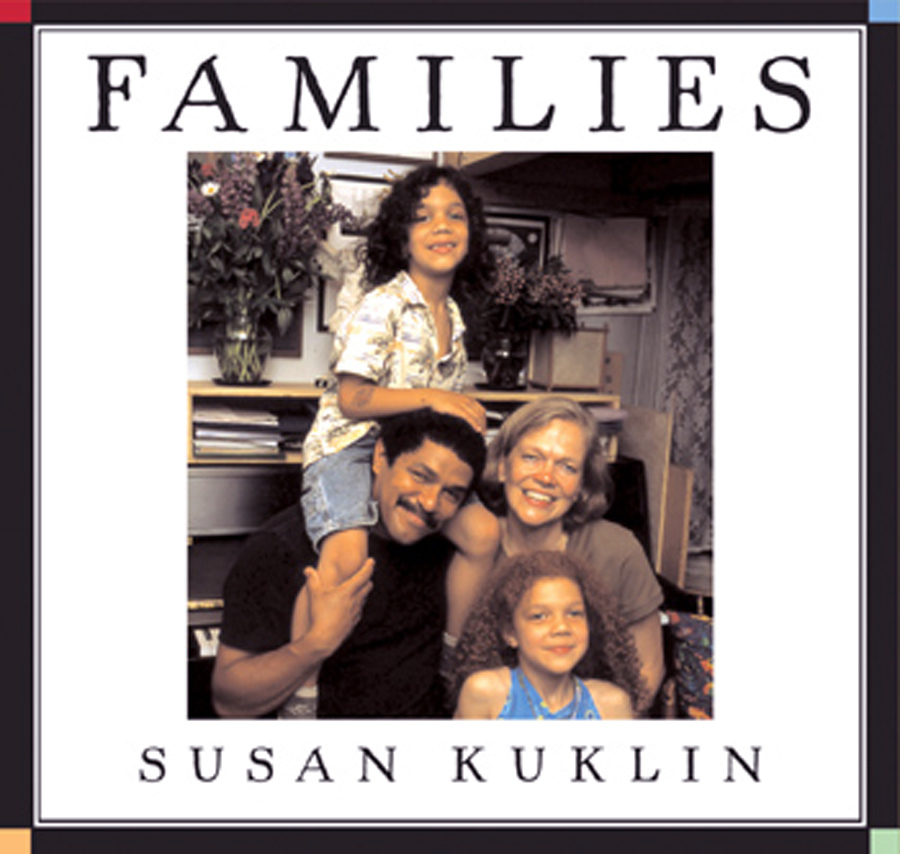
Bring It Back: Families


families-cover.jpg
Among the many genres and subgenres of informational books for children are those about the people around us. One niche in this category are books about families.  Most bookstores or libraries will stock several of these titles.  Some explore families worldwide (beware the title that compartmentalizes race, ethnicity, and religion to geography - especially making America a White land) others look at families here in the United States.  Most authors and photographers do a good job of showing the wide range of families (big families, small families, adoptive families, interracial families, gay and lesbian parents, divorced families) however the writing style tends to use overarching and general language. One exception to this trend is Susan Kuklin’s Families.


Kuklin, Susan. Families. Hypersion, 2006, 36 pages ISBN 978-0786808229 op


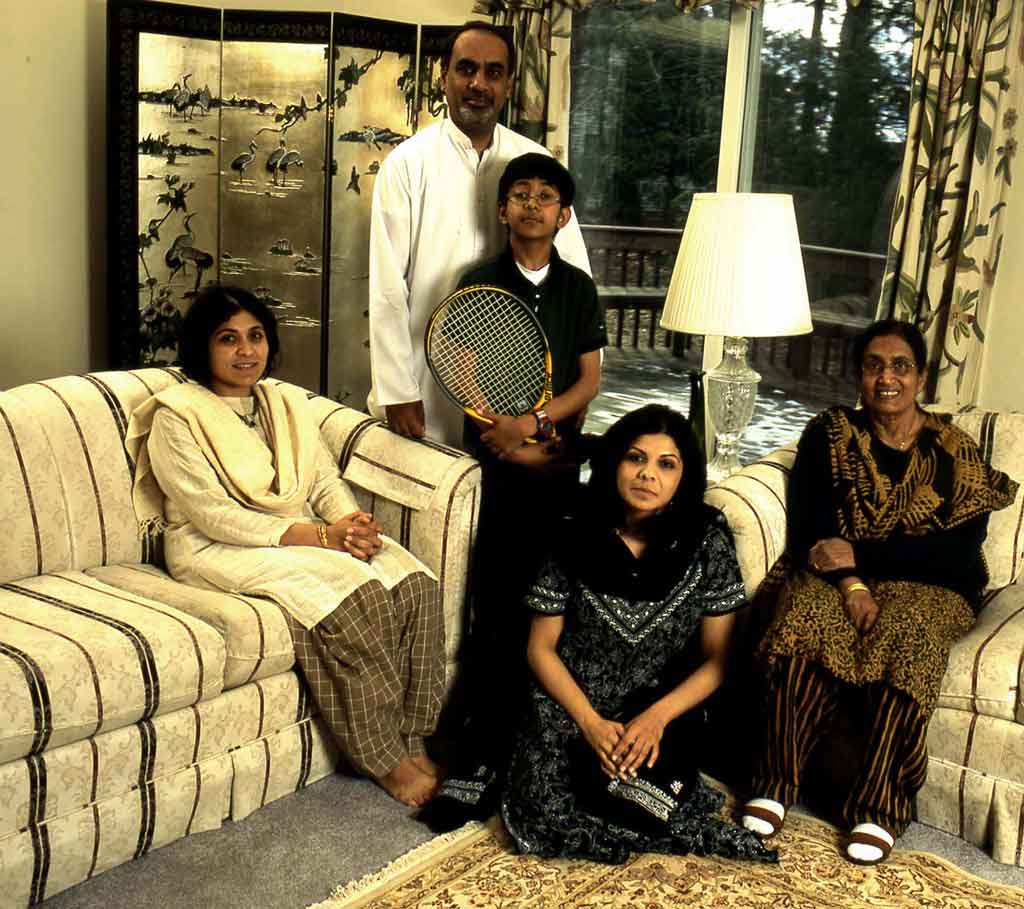
Kuklin interviewed several children between the ages of four and fourteen to learn more about their families. Fifteen families are featured - each on a two page spread.  The children selected clothing, household items, and pose for their family photos.  Each child picked a historic family photo they referenced in their conversations. These images are inset with accompanying text to deepen our understanding of the family's history. This approach to crafting a book about American families creates a text that is wholly unique. We hear the child’s view on their own families. While all of these families live in the United Stated they represent the reality of a global society. The assortment of families we find in this type of book are all here but with a depth and breadth unparalleled by other titles. Kuklin has captured the voice of children introducing the multitude of possible families.   The availability of this notable  project is now limited due to it being out of print.

Some questions that come to mind: Hyperion, can you bring it back? If the pictures and cultural references are outdated, creating barriers to reprinting, maybe a second edition is in order?


families-jehangir.jpg


JEHANGIR: My family’s from India. People think we’re Hindu because most of India is Hindu. I’m Muslim. The things I do are mostly Muslim. But the things I eat and wear are usually from Indian culture.


Cover image, photograph, and excerpt from the author’s website. To see more photos and excerpts from Families visit http://www.susankuklin.net/childrens-books/families/

- Ernie Cox

Tuesday, December 13, 2016

Bring It Back!

I'm sure we've all had the experience of setting out to buy a favorite book as a gift for a child or a teen -- or replacing a worn library copy of a popular item -- only to find out that the book is out of print and no longer available.

This seems to happen with even greater frequency with books by and about people of color and First Native/Nations. Joseph Bruchac's memoir Bowman's Store: A Journey to Myself was published by Dial in 1997 and went out of print so fast it never had time to find its audience or work its way into the secondary curriculum -- and this in a time when teachers were crying out for authentic books about First Native/Nations for their classrooms. Luckily, Lee & Low managed to bring it back into print just four years after its original publication, and it's been in print and available from them since 2001.

Just this fall Lee & Low has brought back into print another great book, Mama and Papa Have a Store by Amelia Lau Carling (as well as the Spanish language version La tienda de mamá y papá, with the translation by Carling as well).  This exceptional picture book recounts part of the author/illustrator's early childhood in Guatemala as a member of a second generation Chinese immigrant family. It was originally published by Dial in 1998 and it won the Américas Award, as well  a Pura Belpré Honor for illustration in 2000. In the early years of the award, there were so few Latinx books that the Belpré Award was given every two years so there would be a large enough pool from which to choose. And there were times when one of the awardees would already be out of print by the time the award was announced.

But Lee & Low can't bring every great book back into print.

I always want to buy John Steptoe's brilliant picture book Baby Says (Harper, 1988) as a gift for every new baby I know. But I can't because it's been out of print for years and I can't afford the $47.50 used book dealers are asking for for it on Amazon. It's a shame Harper never had the foresight to issue it as a board book. They wouldn't even need to change the trim size or truncate the text. How can we let publishers know that we want these books when we can no longer buy them to demonstrate that?  Diverse books need to stay in print longer than they currently do, and they need to be available in paperback and board book editions, too.

With this in mind, we're launching a new series on Reading While White called "Bring It Back!" We hope to call attention to the great  #OwnVoices books we have on our library shelves which have all too quickly disappeared from the stores and warehouses. Because it's not just that #WeNeedDiverseBooks.  #WeNeedDiverseBooksToStayInPrint.

--KT Horning